
Narragansett Bay · Est. 2009
Grown where the river
meets the Atlantic.
Cold-water oysters with a mineral brine signature. Sold by the thousand to white-tablecloth kitchens up and down the coast.
41°29′N · 71°17′W
Chart No. SHK-2026 · Narragansett Bay, RI
The Water
Provenance is flavor.
Every characteristic on the plate starts here.
The Pawcatuck River meets Block Island Sound at a specific latitude where cold offshore upwellings collide with brackish river outflow. That collision — a tidal handshake happening twice a day — is what gives our oysters their layered flavor: clean brine up front, a sweet mineral finish, and a long cold-water close.
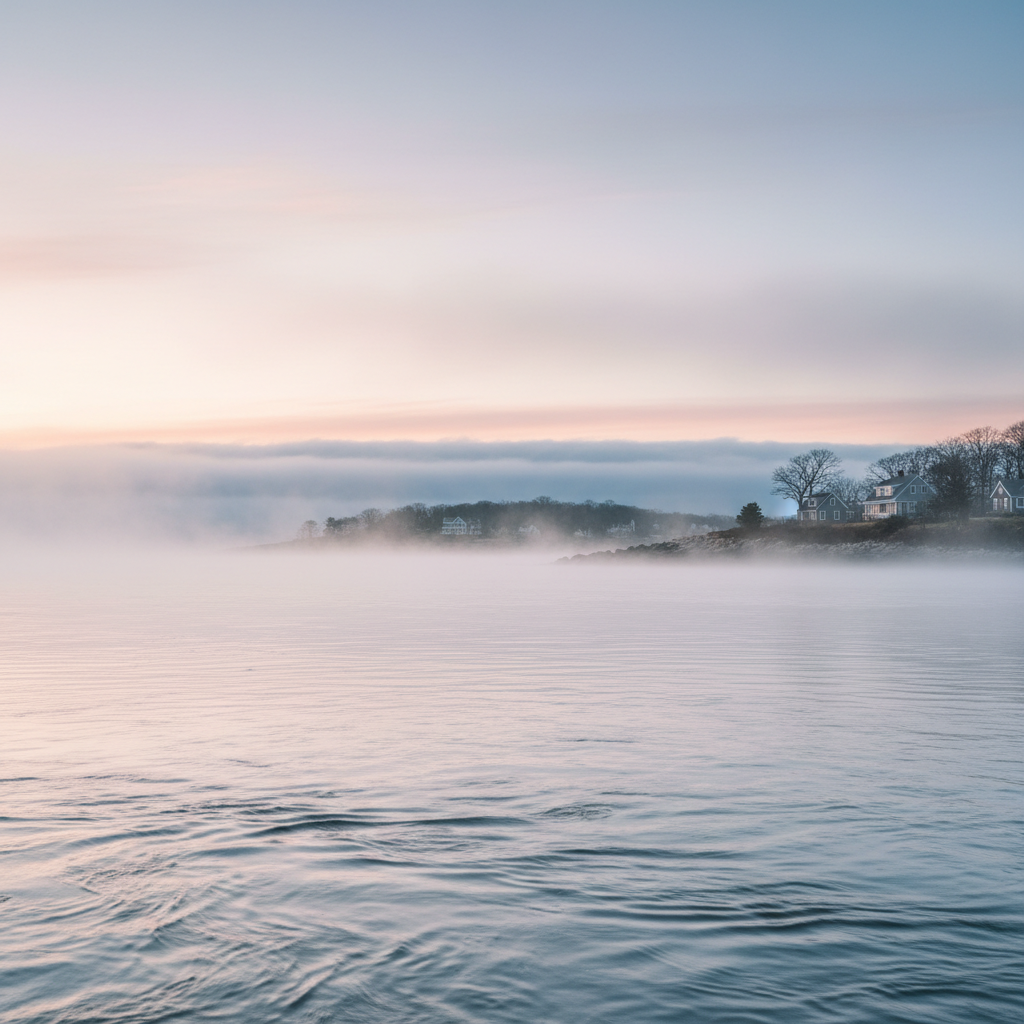
Real-time Salinity · Bed B
Salinity
28–32 ppt
Optimal brine window
Water Temp
34–58°F
Winter to summer range
Tidal Exchange
2× daily
Full Atlantic flush
pH Range
7.8–8.1
Mineral-rich carbonate
Dissolved O₂
9.2 mg/L
High-oxygen cold water
Grow Cycle
18–24 mo
Slow growth, dense cup
"The flats here have been producing shellfish since the Narragansett people harvested them. We're just the current stewards of a very old estuary."
— Marcus Hale, Head Grower · Shuck Farm
What this means on the plate:
- ↗Sharp brine hit on the front palate — not flat, not muddy
- ↗Sweet, nutty mid-note from cold-water glycogen buildup
- ↗Long mineral finish from high carbonate bedrock
The Farm
Seed to shell.
Eighteen months of deliberate craft.
Most buyers never see this part. We think it's the most important part. The flavor you taste in October was decided by decisions made in April of the year before.
Seed & Nursery
2mm → 10mm
in 8 weeks
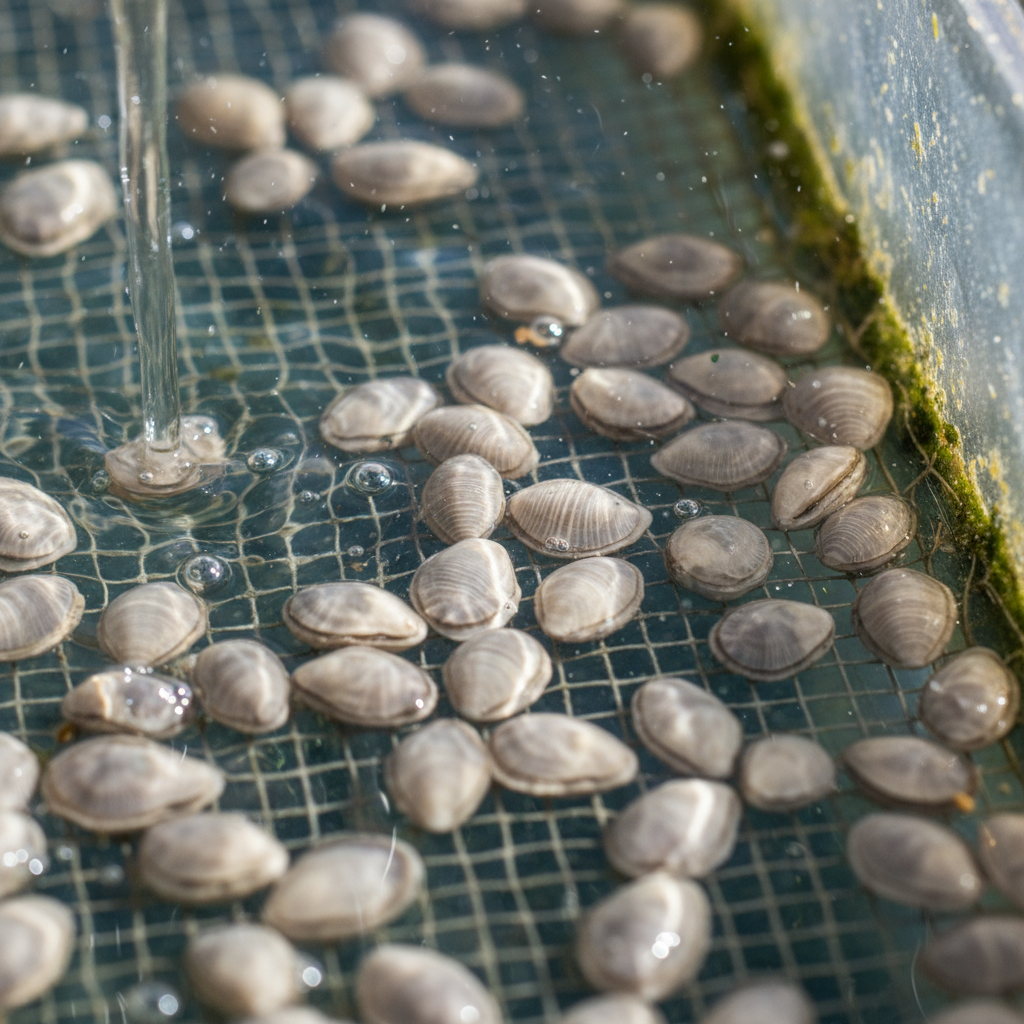
Larvae arrive as D-stage veligers — each the size of a grain of salt. They spend their first three weeks in upweller tanks with filtered bay water flowing at a constant 8°F above ambient, building shell. We lose maybe 15%. The survivors are already stronger than anything raised in a heated hatchery.
Tumble Bags
72 hrs
rotation cycle
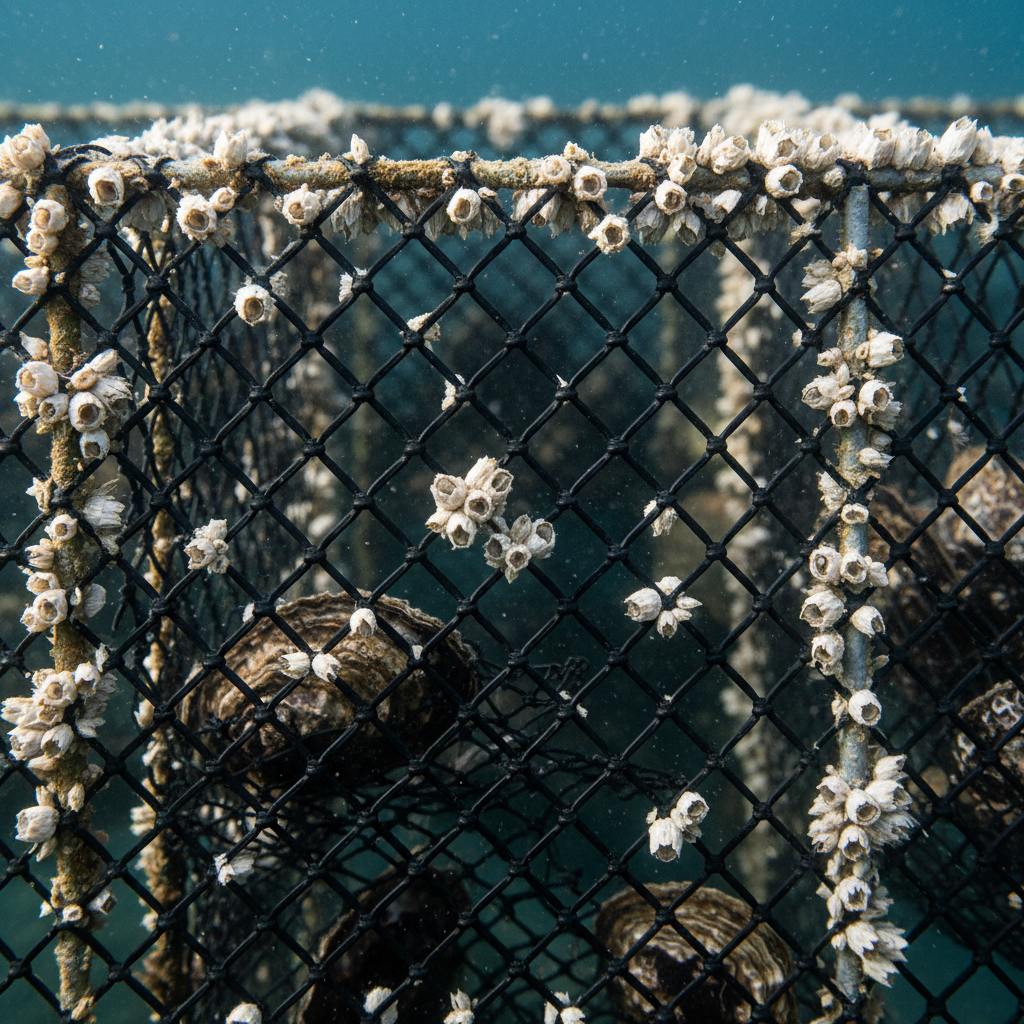
Once seed reaches 10mm, it moves to mesh cages turned on a 72-hour rotation cycle by the tidal current itself — no mechanical tumbling. The natural agitation chips growing edges, forcing the shell to cup deeper and thicker. That cup is what holds liquor on a raw bar platter.
Sub-Tidal Float
6°F
colder than shore
At 40mm the oysters transfer to floating cages anchored in the main channel, 4–8 feet below surface. Full tidal exchange twice daily. Water temperature here tracks 2°F colder than the shallows — slowing growth, concentrating flavor, building the deep adductor muscle that gives our oysters their snap.
Harvest
< 20 min
water to ice
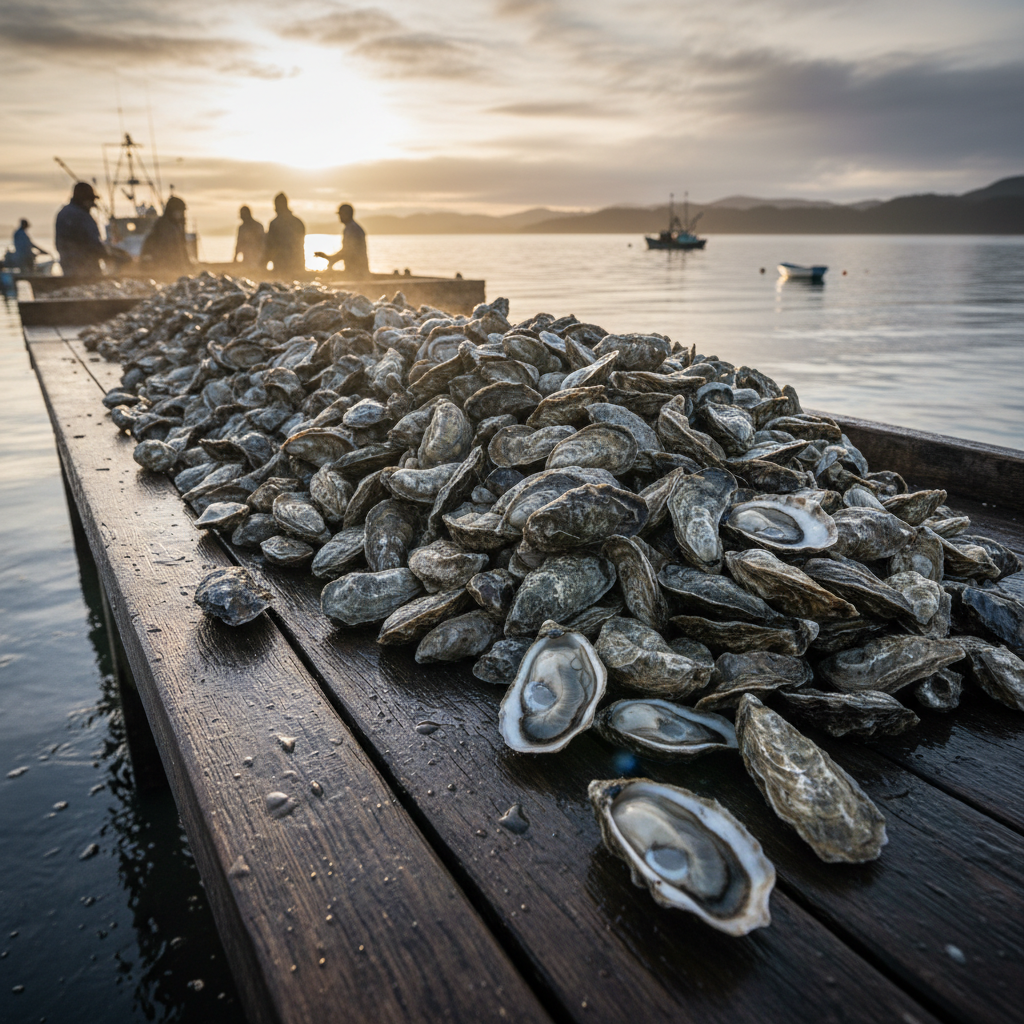
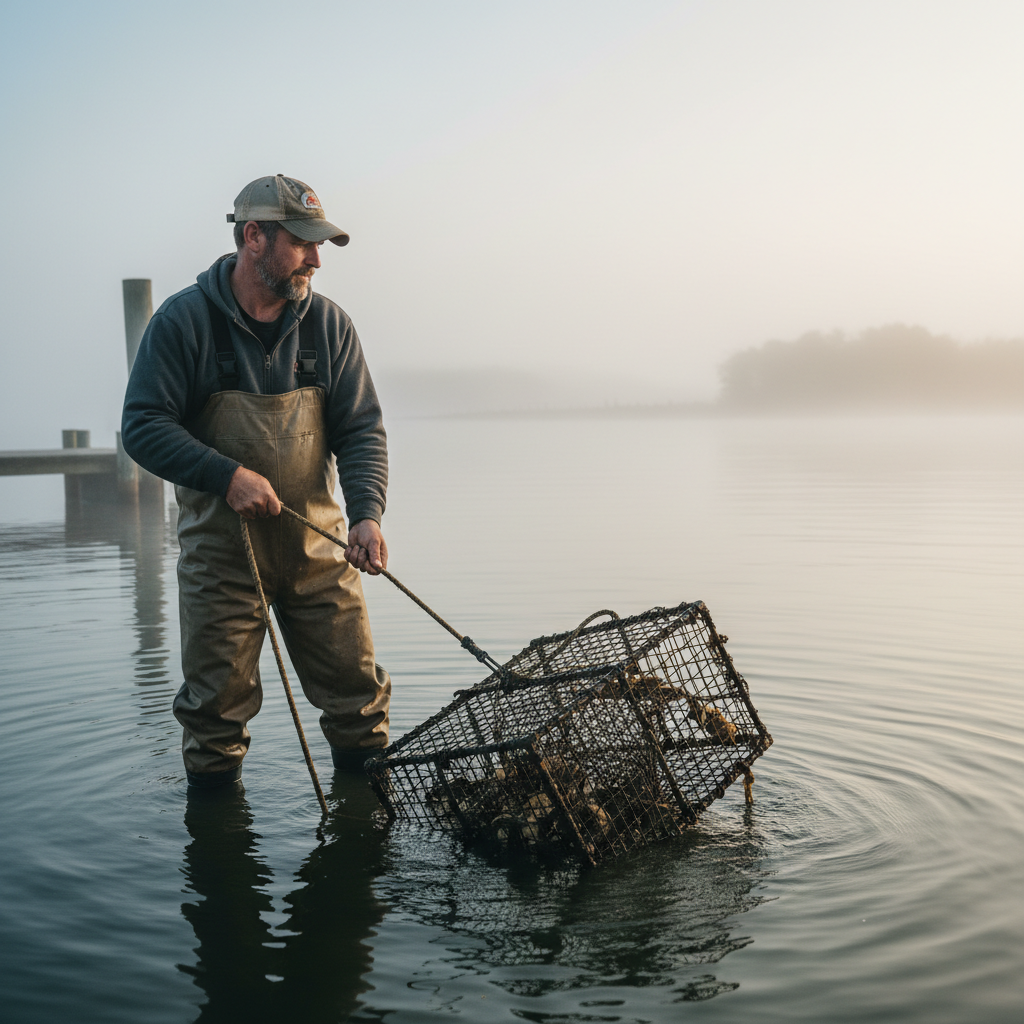
Harvest begins at 3-inch minimum. We pull by hand, not dredge. Each cage is hauled, the oysters dumped onto sorting tables on the boat, and any undersized shells go back immediately. From water to ice takes less than 20 minutes.
The Grading Dock
The 4 a.m. shift.
Where quality becomes a promise.
Every case that leaves this dock has been touched by hand at least three times. No optical sorters. No conveyor lines. Eyes and fingers, the way it's always been done.
Grade
Select
3.0–3.5"
shell length
Raw bar service, half-shell presentations
The house grade. Tight cup, uniform liquor fill, clean break from adductor. What the white-tablecloth programs run as their signature.
Grade
Choice
3.5–4.0"
shell length
Chef tables, large-format raw bars
Slightly deeper cup, higher meat yield. Preferred by programs that shuck to order at a station. The shell holds more visual drama on the plate.
Grade
Petite
2.5–3.0"
shell length
Cocktail portions, mignonette flights
Early pull from Bed A. More saline, less sweet — the flavor is more aggressive. Chefs who know their oysters ask for these by name.
A Typical Harvest Day
Boat departs for Bed B
Cages hauled, first sort on deck
Dock arrival, grading tables running
Ice packing complete, orders sealed
Refrigerated truck departs for Boston, Providence, NYC
Chain of Custody
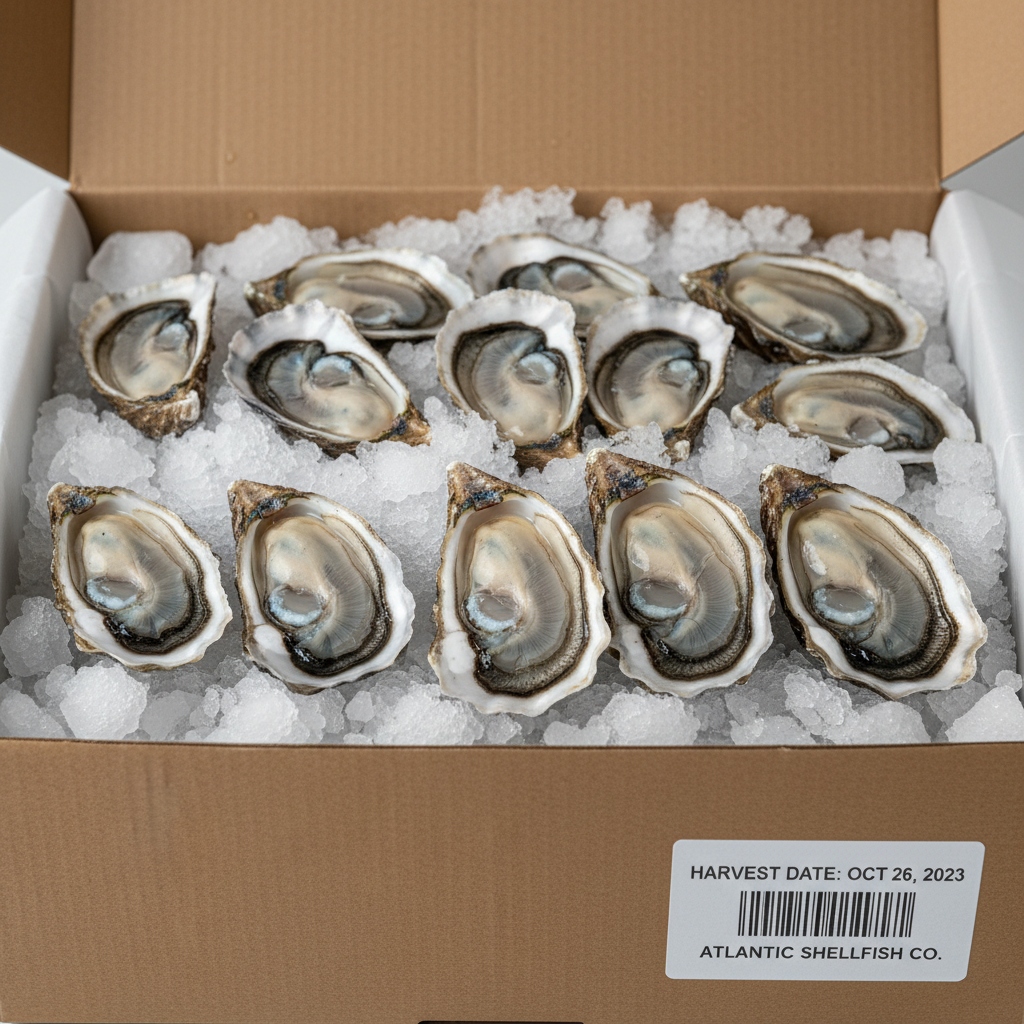
Every shipment ships with harvest date, bed ID, water temperature at pull, and grader initials. Your receiving team can trace any shell back to a specific cage on a specific tide.
48 hr
Shelf life
34°F
Ship temp
100s
Per case
Wholesale Partnership
We sell by the thousand.
Relationships first.
We don't work with distributors who can't tell us where the oysters are going. If you're building a raw bar program, sourcing for a regional variety pack, or need five hundred graded shells by Friday, start with a sample shipment. No obligation — just the oyster making its own case.
Request a Sample Shipment
We'll ship two dozen Select grade, iced, with full provenance documentation. Arrives within 48 hours of your preferred delivery day.
Download Our Wholesale Sheet
Pricing tiers by volume, seasonal availability calendar, shelf-life specs, and delivery zone map. 4-page PDF.
Current Program Partners
+ 40 additional accounts across MA, RI, CT, NY, GA
Minimum standing order: 2 cases / week
We work with programs that can commit to a weekly pull. Event-only orders available for 500+ units with 5 business days lead time.